Guide Overview
This page is designed to help players understand the system logic behind Scritchy Scratchy, not just the surface-level mechanics.
Last updated: March 2026
Updated for: public March 2026 release-era sources
Estimated reading time: 8 minutes
Page goal: help new players understand how to play Scritchy Scratchy, what to prioritize early, and when a run is actually improving
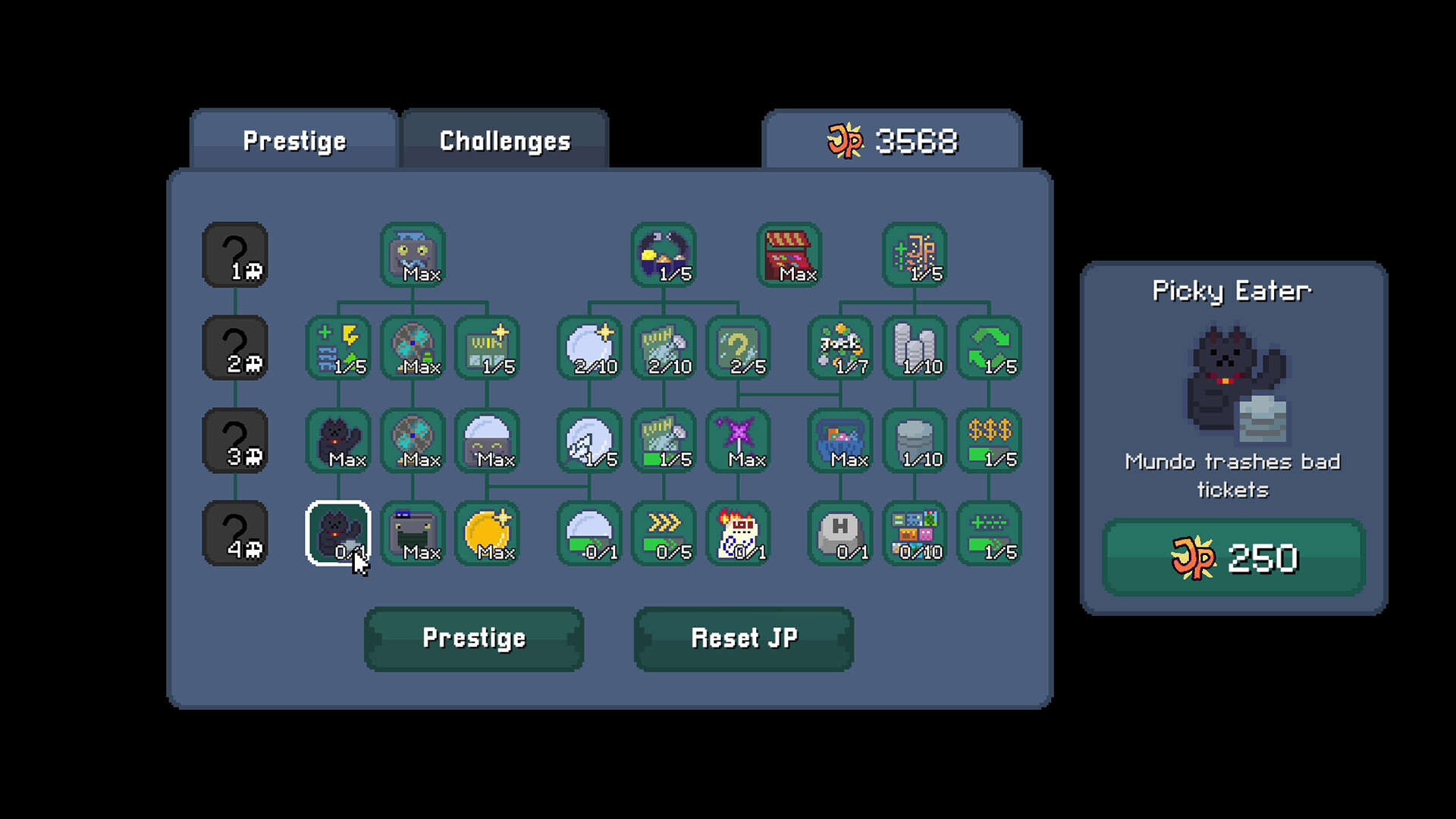 Scritchy Scratchy guide overview
Scritchy Scratchy Guide: What New Players Should Focus On First
A good Scritchy Scratchy guide should not just repeat that the game has upgrades, automation, and prestige. A new player usually wants something more practical:
- What should I do in the first few minutes?
- Which choices actually speed progress up?
- When should I stop thinking ticket by ticket and start thinking about the whole run?
- When does prestige become worth it?
That is what this page answers.
The most important thing to understand is that Scritchy Scratchy starts like a scratch-card game, but it quickly becomes a progression game. You buy tickets, scratch them, collect payouts, reinvest your money, unlock stronger tools, and eventually build a system that works faster than your early manual play ever could.
Quick Start Checklist
Before getting fancy, make sure your first run does these basic things well:
- keep buying tickets instead of waiting too long for one "perfect" moment
- pay attention to whether a purchase improves your pace or only looks exciting
- treat upgrades as tools for smoother repetition, not just bigger numbers
- move toward automation when manual scratching starts becoming the bottleneck
- remember that a slowing run is not always a bad run, but it is often a signal
If you only take one idea from this Scritchy Scratchy guide, take this one:
play for momentum, not for one lucky reveal.
How to Play Scritchy Scratchy Well in the First 15 Minutes
The first 15 minutes shape how the rest of the run feels. Many players waste time here because the game is tactile and immediately rewarding. It is easy to think every decision is fine as long as money is moving. In practice, the opening is where you establish whether your run will feel smooth or awkward.
Minutes 1-5: Learn the loop
Your only real job at the start is learning the basic loop:
buy -> scratch -> collect -> reinvest
This sounds obvious, but many players interrupt that rhythm by overthinking too early. Do not try to "solve" Scritchy Scratchy in the first few purchases. Just understand the pace of the game:
- how fast money comes in
- how long each ticket takes
- how scratching feels
- how quickly the next meaningful purchase appears
The early scratching mechanic matters because Scritchy Scratchy is built around dragging across the card surface, not just clicking a button once. That tactile motion is one of the core identity pieces of the game.
Minutes 5-10: Start noticing efficiency
Once the basic loop feels comfortable, stop asking "Did I win?" and start asking:
- Did this purchase make the next few minutes better?
- Did it smooth out the loop?
- Did it help me earn faster, or just feel flashy?
This is where a lot of players improve fast. Scritchy Scratchy rewards players who notice pacing. A run that feels steady is usually stronger than a run that looks dramatic.
Minutes 10-15: Shift from scratching to managing
Around this point, your mindset should start changing.
You are no longer just revealing one card at a time. You are building a system. This is the moment where players start to see the real shape of the game: ticket buying, upgrades, automation, and later prestige all connect into the same progression loop.
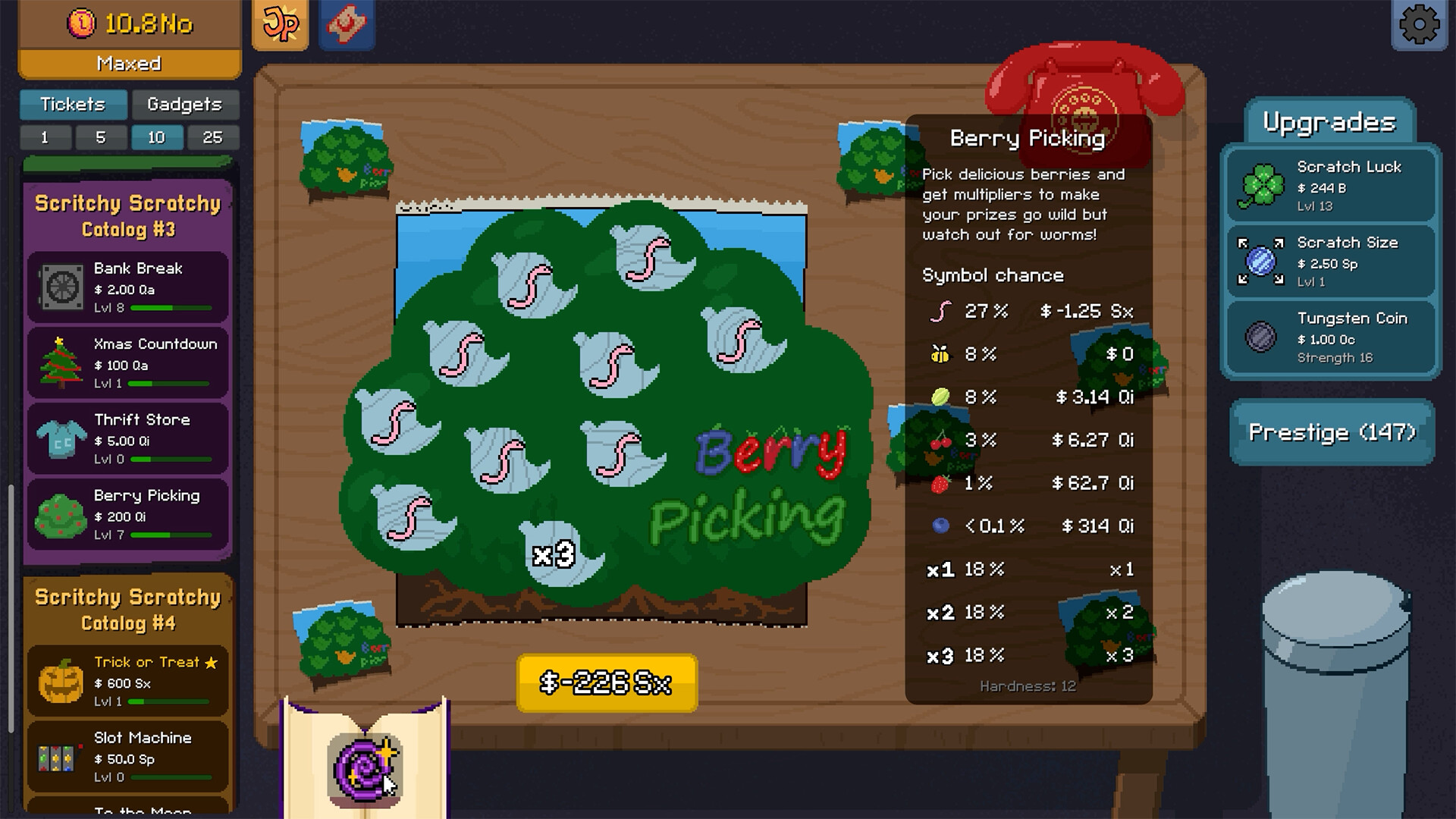 Scritchy Scratchy first 15 minutes
Best Early Priorities
A lot of new players search for how to play Scritchy Scratchy when what they really need is a clearer priority order.
Here is the best early logic.
1. Prioritize loop quality
Your first goal is not one huge win. Your first goal is making the loop easier to repeat.
2. Buy with purpose
Do not buy something only because it unlocked. Buy it because it improves your current phase of the run.
3. Respect ticket pacing
Different scratch cards do not only differ in cost. They change how the run feels. Some are better for steady progress, while others are better once your setup is stronger.
4. Value upgrades that improve flow
Upgrades matter most when they change the next several minutes, not just the next few seconds. Better pacing, cleaner repetition, and less friction usually outperform isolated excitement.
5. Move toward automation
Automation is one of the biggest progression steps in Scritchy Scratchy. The game's own systems are built to shift you from manual play into a more managed run structure. The Auto Scratcher is a turning point, not a side feature.
What to Ignore Early
One of the fastest ways to lose time in Scritchy Scratchy is to focus on the wrong things too early.
Do not overvalue every new unlock
New is not the same thing as efficient. Some unlocks are better tested than adopted immediately.
Do not chase rare outcomes as your main plan
Jackpots are exciting, but they are not a progression strategy by themselves.
Do not assume every run should feel explosive
Good runs are often steady before they are spectacular.
Do not prestige just because you feel impatient
Prestige matters, but it works best when it comes after you actually learned something from the current run.
Common Beginner Mistakes
Mistake 1: Playing emotionally instead of structurally
If every card feels like a dramatic moment, it becomes harder to judge whether the whole run is improving.
Mistake 2: Buying before evaluating
A purchase can be technically affordable and still be the wrong move for your current pace.
Mistake 3: Treating manual play as the ideal state
Manual scratching is satisfying, but the game is clearly designed to open into automation and optimization. Staying fully manual for too long usually slows you down.
Mistake 4: Holding weak runs too long
A run can still be active while no longer growing well. That difference matters more than many players realize.
Mistake 5: Looking for one perfect formula
Scritchy Scratchy is not best played through a rigid script. It is best played by understanding the loop and making cleaner decisions inside it.
When to Prestige
Many players search for when to prestige in Scritchy Scratchy because the reset can feel counterintuitive at first. You finally have income, upgrades, and rhythm, and then the game asks you to give that up.
The right way to think about prestige is this:
it is not there to erase your progress, but to turn one run into a stronger next run. That prestige loop is one of the core pillars of the game's structure.
Here are the clearest signs that prestige is starting to make sense:
- upgrades stop meaningfully changing the pace of the run
- your purchases feel more expensive than useful
- the run feels like maintenance instead of growth
- you already know what you would do better next time
A strong prestige usually happens when the current run has already taught you something.
What a Good Early Prestige Mindset Looks Like
Your first prestige does not need to be clever. It needs to be useful.
The best mindset is:
- what slowed this run down?
- what would make the next run smoother?
- what helps me reach the good part faster?
That is why Scritchy Scratchy works well as an incremental game. It is not just about more money. It is about better loops, shorter rebuilding time, and stronger future runs.
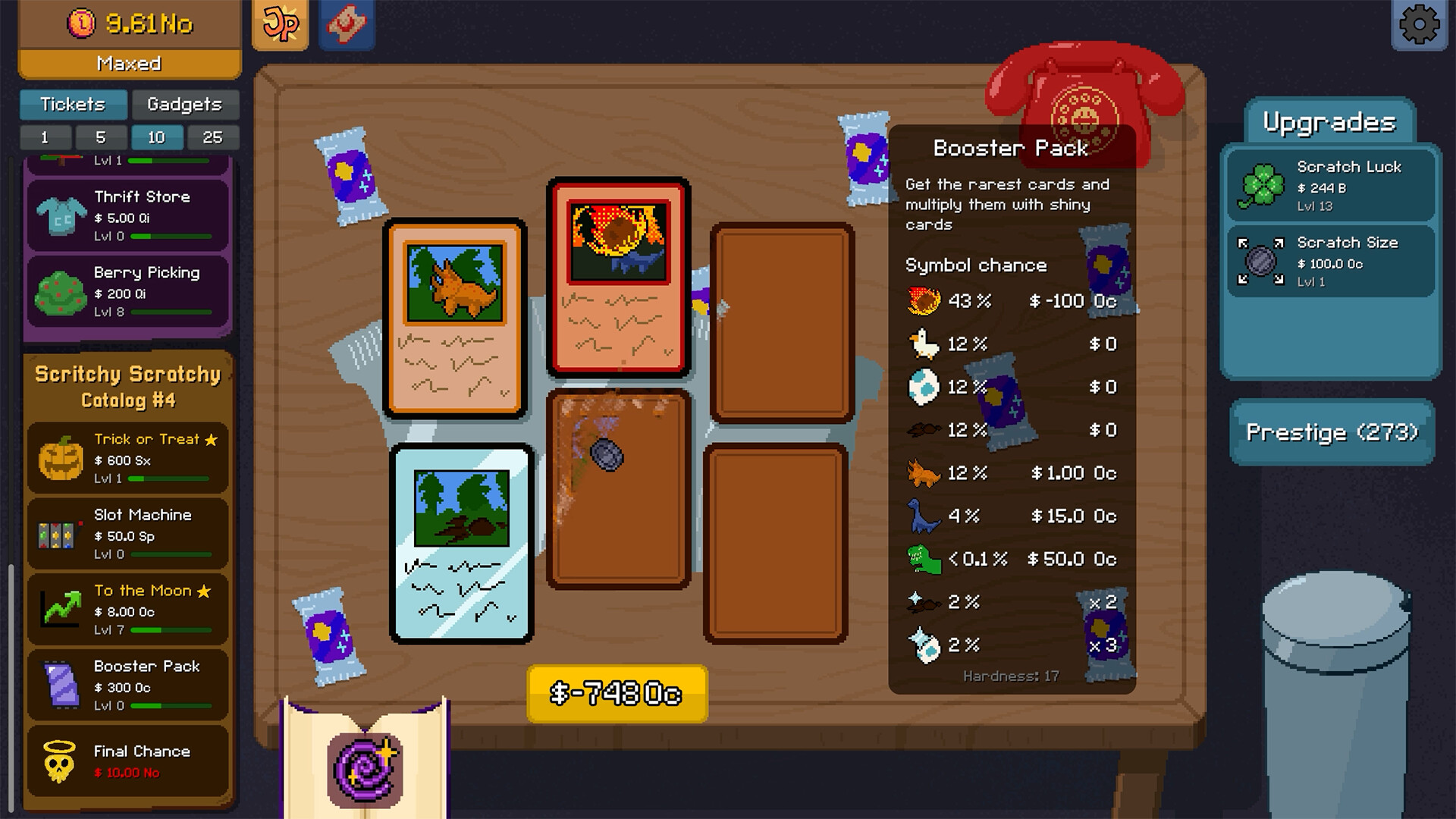 Scritchy Scratchy prestige timing
A Simple Rule for New Players
If you are unsure what to do next, ask this question:
Is my run actually getting stronger, or am I just staying busy?
That one question helps with almost every major Scritchy Scratchy decision:
- whether to keep buying
- whether to try a new ticket type
- whether an upgrade is worth it
- whether automation should be your next target
- whether prestige is getting close
Final Advice
The best Scritchy Scratchy guide is not a giant wall of theory. It is a clean way of reading the game.
Learn the loop. Keep the run stable. Favor purchases that improve flow. Move toward automation. Do not chase excitement at the expense of momentum. Prestige when the current run has flattened out and the next one has something to gain.
That is how Scritchy Scratchy stops feeling random and starts feeling deliberate.