Guide Overview
This page is designed to help players understand the system logic behind Scritchy Scratchy, not just the surface-level mechanics.
Last updated: March 2026
Updated for: public March 2026 release-era sources
Estimated reading time: 7-8 minutes
Page goal: help players decide when to prestige in Scritchy Scratchy and what to prioritize after the reset
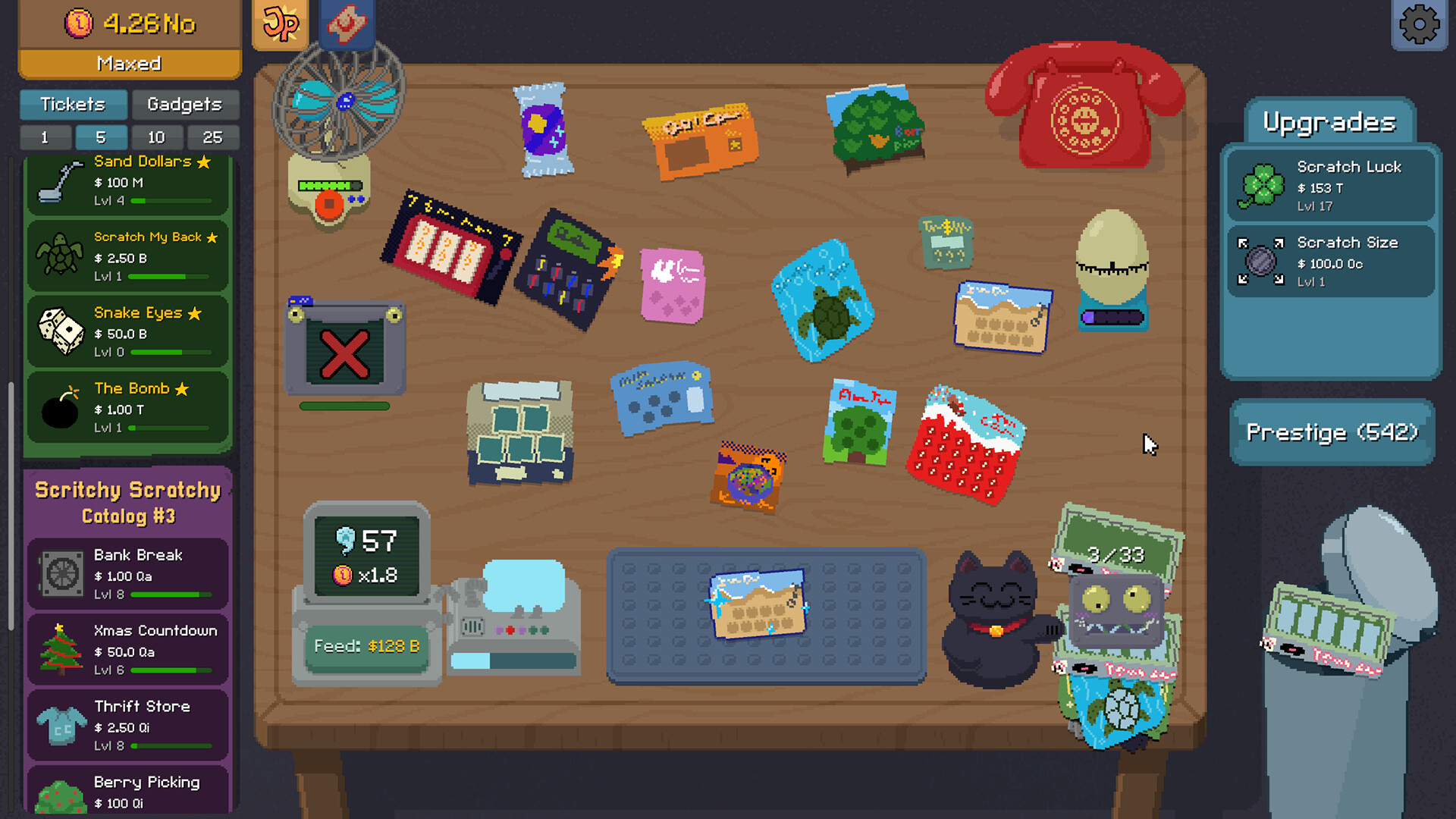 Scritchy Scratchy prestige overview
If you are searching for Scritchy Scratchy prestige, you are usually not looking for a vague explanation of what prestige is in idle games. You are trying to answer a practical question:
Should I prestige now, or am I about to throw away a run that still has value?
That is the real job of this page.
In Scritchy Scratchy, prestige is not just a reset button. It is the system that turns one run into a stronger next run. If you prestige too early, you may cut off momentum before the run has really taught you anything. If you prestige too late, you can end up spending too much time maintaining a run that is no longer growing well.
This guide is here to make that decision clearer.
Quick Answer: What Does Prestige Mean in Scritchy Scratchy?
Prestige in Scritchy Scratchy is the point where you trade current run progress for better long-term progress.
The important part is not the reset itself. The important part is what the reset does to the next cycle.
A good prestige should make the next run:
- faster to start
- smoother to stabilize
- easier to scale
- quicker to reach the fun part again
If the next run clearly improves in those ways, the prestige was probably worth it.
Why Prestige Matters in Scritchy Scratchy
Scritchy Scratchy starts with very direct actions: buy a ticket, scratch it, reveal the result, collect the payout, buy another. But the game does not stay at that level. Its deeper structure is built around repetition, upgrades, automation, and long-term progression.
That is why prestige matters. It is one of the systems that changes the game from a scratch-card toy into a true incremental loop.
Without prestige, every run is mostly isolated.
With prestige, each run teaches the next run how to be better.
That is the key mindset shift.
The 5 Clearest Signs You Should Prestige
A lot of players ask when to prestige in Scritchy Scratchy because the game rarely gives one simple universal answer. Instead of chasing one fixed timing rule, it is better to look for signals.
1. Upgrades stop changing the pace of your run
If you are still buying things, but those purchases no longer make the run feel meaningfully better, that is one of the clearest signals that your current loop is flattening.
2. New purchases feel expensive without opening new momentum
A healthy run gives you stronger options. A tired run keeps asking for more investment while returning less useful progress.
3. You are maintaining, not accelerating
This is the easiest mistake to miss. You are still active. You are still earning. The screen is still moving. But the run no longer feels like it is climbing. It feels like you are just keeping it alive.
4. You already know what you would do differently next time
Prestige becomes much more valuable once you have learned from the run. If you can already name the purchases, habits, or priorities you would change, that is a strong sign that the next cycle will use the reset well.
5. Automation is working, but scaling is dragging
Once the problem is no longer "can I keep the loop moving?" and becomes "why is this taking so long to improve?", prestige is often close.
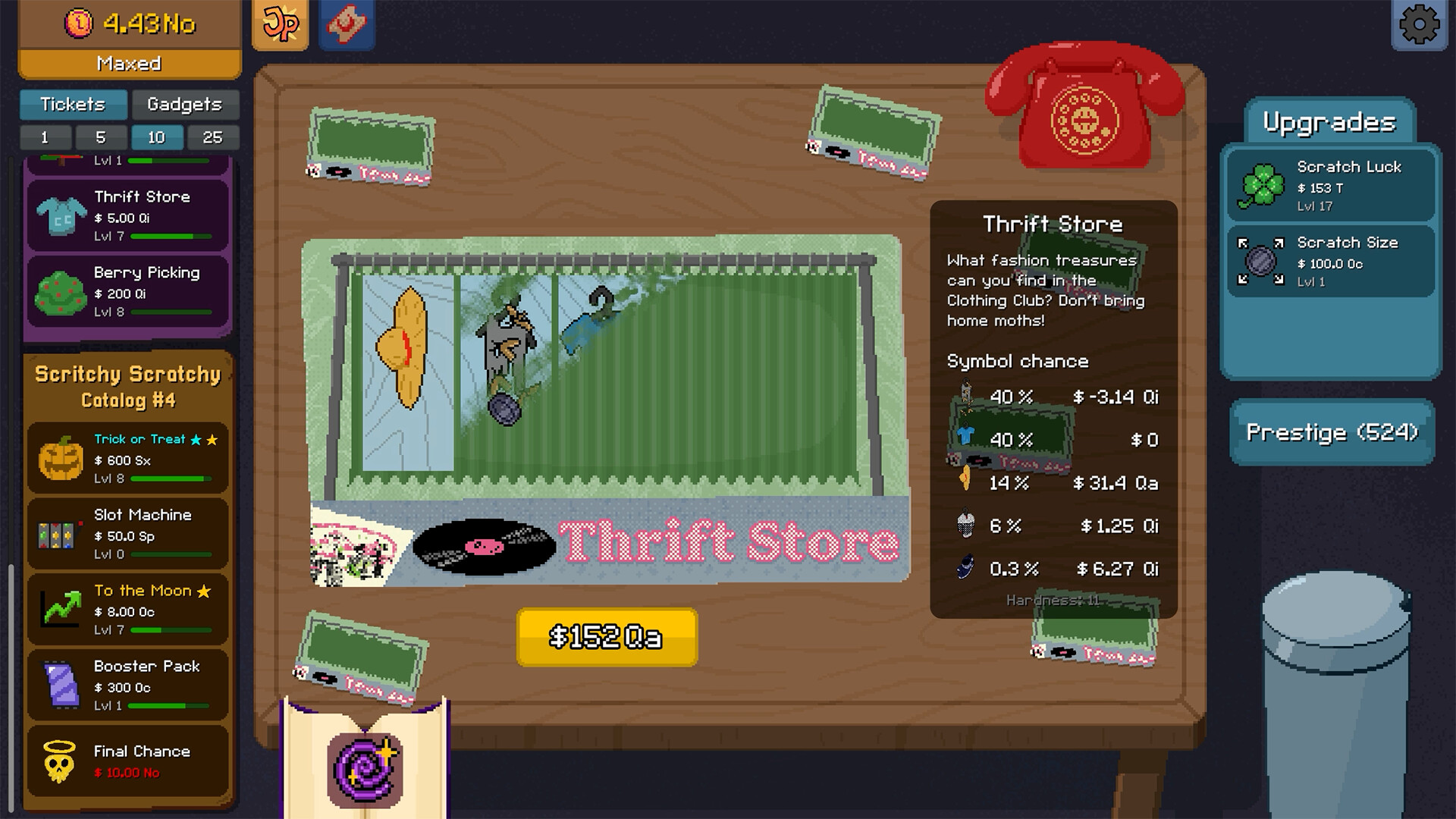 Scritchy Scratchy prestige timing signals
When You Should Wait Instead of Prestige
Not every slow moment means your run is done.
You should usually wait if:
- a nearby upgrade would clearly improve the loop
- automation is about to unlock
- a strong purchase breakpoint is very close
- the run still feels like growth instead of maintenance
- you are still learning something important from the current cycle
The right prestige timing is not "reset whenever progress slows."
It is closer to: reset when the current run has mostly stopped opening better future value.
Prestige Decision Table
| Situation | Prestige now or wait? | Why |
|---|---|---|
| You are still unlocking meaningful systems | Wait | The run still has growth left |
| Upgrades barely change your pace anymore | Prestige now | Momentum is flattening |
| Automation is one purchase away | Usually wait | That could materially improve the run |
| You are grinding for tiny gains only | Prestige now | This is often low-return time |
| You already know multiple mistakes from this run | Prestige now | A smarter next run has real value |
| You are close to a major breakpoint | Wait | Test whether it changes the run first |
| The run is active but no longer feels stronger | Prestige now | Activity is not the same as growth |
Bad Prestige Timing Examples
Prestigeing because you are bored
A reset should improve the next cycle. If you are prestigeing just to force change, the value of the reset usually drops.
Waiting forever because numbers are still moving
This is the opposite mistake. A run can still look busy while giving weak returns.
Prestigeing without a next-run plan
The best prestige moments come when you already know how the next run will improve.
Comparing a fresh run to the absolute peak of the last run
That comparison is misleading. A better comparison is this:
At the same stage of the run, do I feel stronger than last time?
Best First Prestige Priorities
If this is your first serious prestige in Scritchy Scratchy, do not overcomplicate it. Early prestige choices should focus on making the next cycle cleaner.
The strongest early priorities usually look like this:
1. Faster return to stable momentum
If the next run gets out of the slow opening faster, the prestige is already helping.
2. Easier access to your important systems
A good prestige shortens the distance between "new run" and "real run."
3. Less friction
Practical improvements usually beat flashy ones early. If a choice makes the loop feel easier to repeat, it is probably useful.
4. Better path back into automation
Since automation is one of the biggest turning points in Scritchy Scratchy, anything that makes it easier to reach again has strong value.
What Not to Prioritize Too Early
Players often weaken their first prestige by focusing on things that sound powerful but do not improve the next run enough.
Be careful with anything that:
- matters mostly in the late game
- increases variance more than consistency
- looks exciting on paper but does not improve flow
- gives visible numbers without cleaning up the loop
The best early prestige is not the loudest one. It is the one that makes the next cycle noticeably smoother.
 Scritchy Scratchy prestige decision making
How Prestige Changes Your Next Run
A good prestige should change the next run in visible ways:
- the opening feels less slow
- your first meaningful decisions arrive sooner
- you reach stable income faster
- you return to automation with less friction
- you can tell the same stage is stronger than it was before
That is the real test of whether the reset worked.
Prestige is useful when it turns past effort into better future pacing. If the next run does that, the reset was not a loss. It was progress.
A Simple Prestige Framework
When you are unsure, ask these three questions:
Question 1
Is this run still opening meaningful growth, or am I mostly just keeping it going?
Question 2
If I prestige now, do I already know what I will do better next time?
Question 3
Am I delaying the reset because it is strategically smart, or because I do not want to give up visible progress?
Those three questions solve most prestige hesitation better than staring at the reset button.
Final Advice
The best Scritchy Scratchy prestige decisions come from reading the run honestly.
Prestige when the loop has clearly flattened, not just when it has slowed slightly. Wait when a real breakpoint is still close. Prioritize choices that improve pacing, not just appearance. Compare runs by quality of progression, not by attachment to visible numbers.
Once you start thinking that way, prestige stops feeling like giving something up and starts feeling like how the game actually grows.